Before I really dive into this response, I just want to make something clear; I think that people should be able to read whatever they want to read, regardless of age, gender, race, etc. People have different genre preferences, and that's okay. However, I do believe to a certain extent that genres are meant to (and should be) steered towards a specific audience.
YA novels exemplify this better than any other genre. Since they are targeted for a teenage audience, it's a bit strange to see adults reading them. Sure, they're not ALWAYS centered around romance, but we have to admit that 9 times out of 10 they are. I'm sure that adults feel some sort of sentiment towards the teenage romance and emotions, but to a certain degree it almost takes them out of reality entirely.
The relationships are almost too perfect, and that sets people up for disappointment in real life; they expect for boys and girls to be shaped exactly to their liking, but that's not how life works. Relationships don't start wrapped up with a cute bow and continue to go along without any problems (although I guess you could count love triangles as "problems", even though it's usually two hot guys fighting with tooth and nail over the girl). It's become a common theme in social media and people in my generation to assume that guys will always know the right thing to say and have a spectacular date planned out; the reality is that boys don't have the money or telepathy to know what a girl wants from him. This leads to bad dates and girls who can never really fall in love because the guy they're looking for doesn't exist.
To me, it doesn't matter who is writing a YA or who reads it; the fact of the matter is that the obsession with the genre come from a fascination with a dream date that doesn't exist and a relationship that won't come out exactly the way they want it to. It's fine to dream, but at some point you have to get your head out of the clouds and realize that things aren't always exactly the way you planned.
Thursday, March 10, 2016

Thursday, March 3, 2016
The Thriller Genre
Thriller is a genre that relies heavily on emotion and keeping the reader on the edge of their seats. While thriller and mystery novels share some characteristics, thriller relies more on the actual takedown of a villain rather than the process of identifying them. What makes thrillers unique is the multiple viewpoints that they take in order to get a clearer picture of what's going on and to build the suspense of the protagonist taking down the villain. Thrillers live to put the main character through the wringer until the very end when they finally win (or, in some cases, reach a somewhat satisfactory conclusion). But the main focus of thrillers is never really on characterization; it's on the plot and how it drives the characters, as well as the readers, to bite, scratch, and crawl their way to the bitter end through the rollercoaster of events and emotions.
The reader always feels the build up of suspense and can't put a book down when it's a thriller; they're designed to keep making the reader turn the pages to drive off the constant, gnawing question of "what happens next?". Authors build the protagonist and antagonist so that one is thwarted (not always completely, but at least somewhat) and the other is stronger in the end. This consistent build up gives the reader satisfaction at the end when they know that things have been resolved and the anxiety is over.
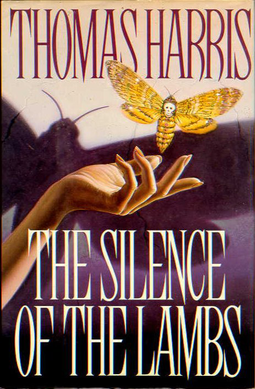
One of the most classic thrillers of all time, The Silence of the Lambs, has all of the basic components of a thriller. Many people refer to this as the thriller to read because of its psychological elements and the suspense.

A Thrilling Genre; Thriller Novels and Subgenres: http://writersrelief.com/blog/2008/12/a-thrilling-genre-thriller-novels-and-subgenres/
Brief Definition of the Thriller Fiction Genre: http://www.findmeanauthor.com/thriller_fiction_genre.htm
The reader always feels the build up of suspense and can't put a book down when it's a thriller; they're designed to keep making the reader turn the pages to drive off the constant, gnawing question of "what happens next?". Authors build the protagonist and antagonist so that one is thwarted (not always completely, but at least somewhat) and the other is stronger in the end. This consistent build up gives the reader satisfaction at the end when they know that things have been resolved and the anxiety is over.
One of the most classic thrillers of all time, The Silence of the Lambs, has all of the basic components of a thriller. Many people refer to this as the thriller to read because of its psychological elements and the suspense.
Another thriller (that is actually based on a true story) also follows the basic guidelines. Truman Capote's In Cold Blood focuses on the viewpoint of the murderers, but also the victims and the people trying to hunt them down. It focuses on the chase of the killers and the overall emotions that all of the characters feel at every point.

Articles:
Ten Basic Ingredients of a Successful Thriller: http://www.writersdigest.com/qp7-migration-conferencesevents/qp7-migration-maui/10-basic-ingredients-of-a-successful-thriller
Brief Definition of the Thriller Fiction Genre: http://www.findmeanauthor.com/thriller_fiction_genre.htm
Thursday, February 25, 2016
Gone Girl: Movie vs.Book

*WARNING: MAJOR SPOILERS*
Overall, the movie version of Gone Girl stayed very true to the book. However, there were some obvious differences that made the perception of the characters slightly different than in the book.
One of the biggest things that I noticed was how Nick was portrayed as a lot more trapped and pitiful than he was in the book. This is especially evident when Nick realizes that Amy is framing him, but he doesn't want to explain or reveal it to Boney or Go to try to get them to help him; instead, Boney stays out of the investigation once Amy returns and makes it seem like Nick doesn't have a choice. Nick is also perceived as a little less sleezy and pitiful than in the book; the morning of Amy's "disappearance", Nick actually goes to the beach instead of going to see Andy and reading issues of his old magazine like in the book. The viewer feels a little more sorry for Nick than they do in the book because of this (until his mistress comes in, of course).
The perception of Amy is also altered. In the movie, when she goes to fake the crime scene, she siphons her blood out of a tube rather than cutting herself like she does in the book. This makes her seem a little more calculated and careful about what she does (as well as a little less crazy). She is also a lot more careful with her money when she's hiding in the cabin as well. The only time she is less calculated and more gruesome is when she kills Desi. In the book, she slips him her sleeping pills and then kills him, but in the movie, she slits his throat while he's awake, and she murders him after being with him for days in the book, but the movie cuts the timeline shorter. The movie also doesn't go into the other instances of Amy's crazy episodes, like the two "friends" she had in the past. In the book, Nick uses their stories to validate what he thinks about Amy. In the movie, they aren't mentioned, making it seem like Amy only became crazy after she met Nick.
As for the other characters, Boney and Gilpin play much larger roles; for example, they're the ones that go into the abandoned mall to investigate instead of Nick and Amy's father. Since the book was more inside of Nick's head and the movie can't do that (obviously), there's a lot more focus on the actual investigation, which helps keep it interesting, rather than having pointless comments from Nick that have nothing to do with what's going on; this gives more opportunity for Boney and Gilpin to have key roles.
Two characters that were noticeably missing were Desi's mother and Tanner Bolt's wife. Although neither of them played a key role in the book, they once again change the perception of the two main characters. The absence of Desi's mother adds to the "less crazy" perception of Amy in the movie. The absence of Tanner Bolt's wife doesn't really do much, but it is interesting that in the book it was an interracial marriage (not entirely sure why it was in the book; just some social commentary about differences between the north and the south?).
Overall, I think that the movie had a lot more intensity because of the fact that it focused on the investigation rather than having pointless side stories, trashy comments from Nick or psychotic ones from Amy. Also, Nick gets the last word instead of Amy, which I think he deserves; even though he wasn't a great guy, Amy put him through a lot of crazy crap.
Thursday, February 18, 2016
Gone Girl Trailer
After watching this trailer, I expect that this movie will be very fast paced compared to the book. In the book, it takes a long time for the twists and developments to occur. The movie makes it seem like it's more about the investigation and the suspicion than the background of Nick and Amy's relationship. From this trailer, Amy isn't exactly how I imagined she would be based on the book. Desi also seems different in the trailer than how I saw him in the book; in the book he seemed much more relaxed and luxurious, but in the trailer he almost seems dead inside. Nick is exactly the way I imagine him. As far as I can tell, the movie is very similar, if not exactly like the book. The only difference may be that the book a lot more psychological because you can actually see into each character's thoughts. The movie might stay more on course with what's happening with the crime and everything, because rather than getting distracted with random back stories from Nick and Amy that have no relevance to the mystery, it's easier to get tangled in the plot.
I enjoyed this book a lot because of the revelations and the extreme twists that occurred; I hope that the movie reflects the same amount of suspense. I hope that is also attaches me to the characters the way that the book does so that the twists are just as devastating. Without that attachment, the twists don't seem that bad and don't really affect the viewer/ reader at all, but those emotions are what's so good about the book. I hope that this gets reflected in the movie so that people who didn't read the book can go through those same highs and lows.
Thursday, February 4, 2016
Movie Adaptions
I haven't read a lot of books that have been adapted into movies, but the ones I have read have blatant differences from the movies. While some of these changes are necessary to make the movie more interesting for viewers, there are others that directors make that stray away from the book almost entirely.
A classic example would be the Harry Potter series. In my opinion, the movies were very good and followed the books very closely. But some of the changes that they made were just inexcusable. The most obvious one was in The Goblet of Fire:

There was no need to have such a drastic change in Dumbledore's character from the book to the movie; it just painted a beloved character in a terrible light.
In other film adaptions, whenever you talk about how they compare to the book, almost everyone emphatically says, "the book was WAY better". The main reason they say this is because the movie leaves out a lot of important details or events that were in the book. It's understandable that every single small detail from the book can't be in the movie due to time and budget constraints, but when huge events or characters are left out, you can't help but feel like you were robbed a little bit; you feel sorry for people that haven't read the book because they're missing out on such a great part of the story.
But I also think that films do a good job of expanding on things that may have only been a page or half a page in the book. They help us get a unique visual of the book and understand certain aspects of the plot that we couldn't quite see just by reading. Getting to see the story you love on screen helps you feel even closer to it (unless you hate the adaption; then you just cry).
A classic example would be the Harry Potter series. In my opinion, the movies were very good and followed the books very closely. But some of the changes that they made were just inexcusable. The most obvious one was in The Goblet of Fire:

There was no need to have such a drastic change in Dumbledore's character from the book to the movie; it just painted a beloved character in a terrible light.
In other film adaptions, whenever you talk about how they compare to the book, almost everyone emphatically says, "the book was WAY better". The main reason they say this is because the movie leaves out a lot of important details or events that were in the book. It's understandable that every single small detail from the book can't be in the movie due to time and budget constraints, but when huge events or characters are left out, you can't help but feel like you were robbed a little bit; you feel sorry for people that haven't read the book because they're missing out on such a great part of the story.
But I also think that films do a good job of expanding on things that may have only been a page or half a page in the book. They help us get a unique visual of the book and understand certain aspects of the plot that we couldn't quite see just by reading. Getting to see the story you love on screen helps you feel even closer to it (unless you hate the adaption; then you just cry).
Thursday, January 28, 2016
Book Review

For this blog post, I am reviewing the book The Guilty by David Baldacci. It was published by Grand Central Publishing in 2015 and has 418 pages. The genre is mystery, thriller, and suspense. This book is about a man named Will Robie who fails a mission and discovers that his dad is being charged with murder. In order to save his father and confront his past, Will goes back to his hometown to clear his father's name.
The story takes place in a small, southern town named Cantrell, Mississippi. It is told from a third-person omniscient perspective and focuses on Will Robie. Will Robie is a top assassin for the United States government who fails to complete one of his missions after a traumatic event occurs. After discovering that he no longer has the will to continue, he goes back to his hometown to try to resolve his past issues and regain his skills. His father, Dan Robie, became a town judge while Will was away and was very respected by the other citizens of Cantrell. He refuses to state whether or not he committed the murder and represents himself in court. Jessica Reel, another top assassin and Will's most trusted partner, helps him with the investigation. The main theme of this book is redemption; even after being away from home for twenty years, Will and Dan Robie still wish to make amends and look forward instead of always looking back.
*I would love to give a plot summary, but there are a lot of spoilers that could be given away, so I think that the above paragraph is all the information I can give.*
I really enjoyed this book because you could never predict what was going to happen next; I enjoy thrillers and mysteries for that very reason. Even within the first twenty pages, there are so many twists that happen and keep the reader at the edge of their seats. The characters and plot are developed so well throughout the entire book that you feel like you're stuck in their situation along with them. Foreshadowing is also used throughout the book with the characters' actions and dialogue. The constant questioning and doubt makes you want to read more, and just when you think you have everything figured out, another twist or development comes up that changes the whole situation. I loved the way the story ended and how everything was resolved instead of having loose ends.
Overall, I would give this book a five out of five stars due to its unpredictability and its theme of redemption and hope for the future.
"'You[Will] were right. To go forward, you have to go back. You get this square, your foundation is set. You can move on. But until then, you're going to be damaged goods'" -Jessica Reel (Baldacci 276).
Thursday, January 14, 2016
Author Research

The author of The Guilty, David Baldacci, has published close to 40 books and counting. Over 110 million copies of his books have been sold worldwide and he has had several books on the bestselling list for both adults and children. His books have also been translated in over 400 languages and sold in about 80 countries.
Aside from his writing accomplishments, David has donated to and become a part of many charities and even founded one himself. He and his wife Michelle started the Wish You Well Foundation, which helps support the education of people who can't afford books or school. His main mission is to teach everyone to read. "If everybody read, we'd have a much better world" (Baldacci from Fox 8 interview).
David mainly writes thriller novels, but explored the fantasy genre when he wrote The Finisher for a younger audience. He likes having the ability to create an entire new world rather than having to comply to the rules of the real world for his books.
Despite living a solitary life as a writer, David says that he loves interacting with other people and going to book events because he believes that it helps improve the quality of communities.
Helpful Links:
Subscribe to:
Posts (Atom)